

The Humanity Initiative’s mission is to inspire participation in positive change. We are but a determined team of four friends on three continents, spurred onward by the generosity and kindness of public donations.
Founded in 1984, we initially published a journal of non-fiction and photography called humanity, designed with the participation and generosity of The Rhode Island School of Design. Our first contributor was His Holiness The Dalai Lama, who happily agreed, during a private audience, to write a letter to the children of the world. In 1997 we ceased publishing hard copy in favor of the internet.
We currently are curating over 200 “voices of humanity” — writers, poets, teachers, artists, photographers, musicians, dancers, filmakers, and philosophers from across the ages and the continents, urging people worldwide to join together in rescuing our humanity, to take action, no matter the humility of our efforts, no matter available time.
Not least, these visionary individuals help clarify and engage humanity’s most urgent challenges: ending war, solving climate change, and saving democracy — as well as the rapid evolution of artificial intelligence.
Please join us with your support, as we work towards helping to inspire a future that thrives on the light among us — and mitigates the darkness that so often fractures humanity’s way.
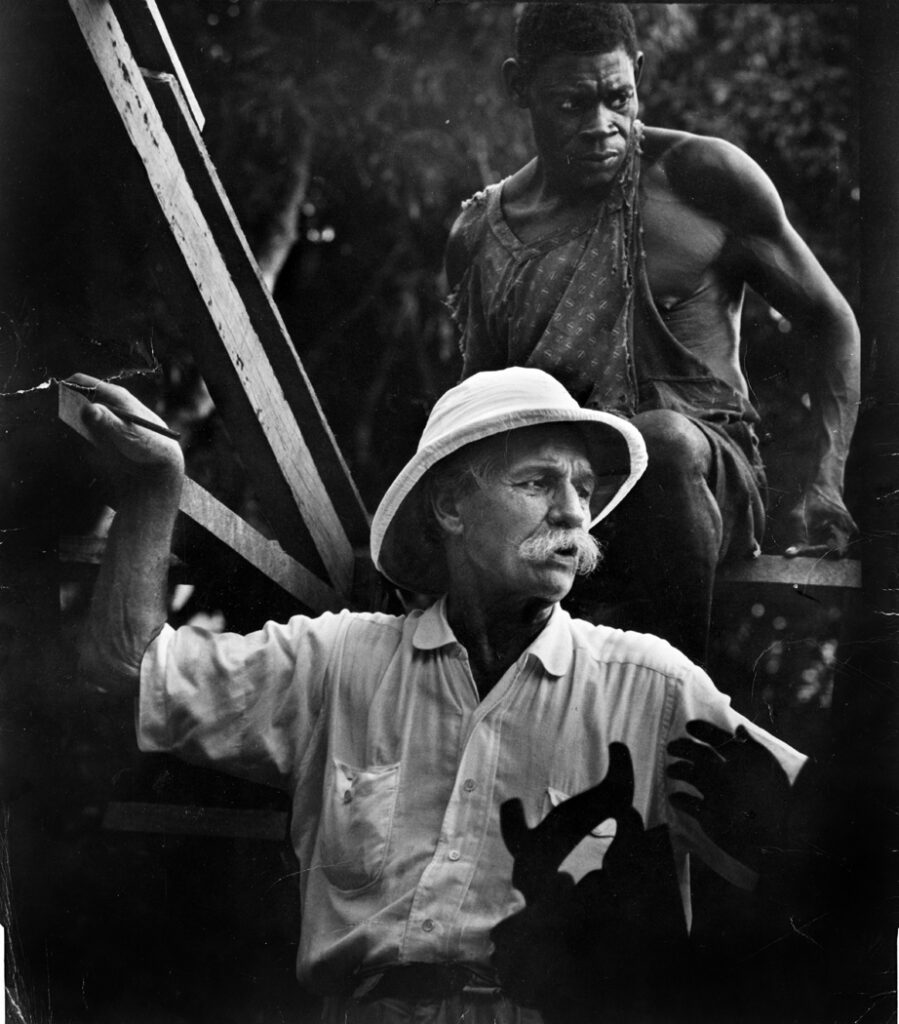
by W. Euggene Smith for LIFE magazine.
Exploring the world of positive change
As an aid in discerning your personal pathway into the arena of positive change, here are The Humanity Initiative’s choices for the most respected and effective non-profits on the planet — giving you a head start on understanding the complexity and challenges of positive change as well as where you might best volunteer.
They are among the world’s most effective, efficient, clear-sighted, and Earth-affirming PCE’s (positive change enterprises), representing an astounding legacy of vision, courage, and hard work — and they will welcome your participation! We have included both their primary home page and the one that includes their volunteer opportunities.
FYI: *** denotes THI’s “magnificent seven,” our absolute favorites — for now.
Africa Foundation (founded 1992) www.africafoundation.org.za/; www.africafoundation.org/donate . Working to uplift, up-skill and empower identified rural communities living close to core conservation areas. Active across six countries: South Africa, Kenya, Tanzania, Mozambique, Botswana, and Namibia.
Amnesty International (1961) www.amnesty.org; www.amnesty.org/en/get-involved/take-action/. Campaigning for a world where human rights are enjoyed by all. Every year, representatives fro tend a Global Assembly to vote on decisions that guide the Amnesty movement.
*** Ashoka, Innovators for the Public (1980) www.ashoka.org; www.ashoka.org/en-us/engage-1 They have a half-dozen ways to get involved. Ashoka envisions a world in which everyone is a changemaker, a world where all citizens are powerful and contribute to change in positive ways. It has created over 4000 Ashoka fellows from 95 countries.
*** charity:water (2006) www.charitywater.org; www.charitywater.org/donate/the-spring? Works exclusively with local partners in 29 countries who build sustainable, community-owned water projects. Their partners also facilitate comprehensive water, sanitation, and hygiene programming to protect everyone’s long-term health.
*** Doctors Without Borders (1971) www.msf.org; www.msf.org/donate. Brings medical humanitarian assistance to victims of conflict, natural disasters, epidemics, or healthcare exclusion. Works in over seventy-five countries across the continents.
Earth Law Center (2008) www.earthlawcenter.org; www.earthlawcenter.org/donate-to-elc. A “think, share and do” organization that promotes recognition of the intrinsic value, interdependence, and legal rights of all Earth’s inhabitants and ecosystems.
Global Exchange (1988) www.globalexchange.org; www.globalexchange.org/ways-to-donate. A research, education, and action centre dedicated to promoting people-to-people ties around the world. At the GXsite you can get involved in fair trade, education, global economy, or human rights campaigns
*** Human Rights Watch (1978) www.hrw.org; www.hrw.org/about/about-us. Investigates and reports on abuses happening in all corners of the world. 550 country experts, lawyers, and journalists who work to protect the most at risk, from vulnerable minorities and civilians in wartime to refugees and children in need.
International Peace Bureau (1891) www.ipb.org; www.ipb.org/topics/peace-education/. 300 member organizations in 70 countries dedicated to the vision of a World Without War. Main program is Disarmament for Sustainable Development and within this, focus is mainly on the reallocation of military expenditure.
*** International Rescue Committee (1933) www.rescue.org; www.rescue.org/how-to-help (We wish every site had public clarity like IRC’s!!) Helps people affected by humanitarian crises to survive, recover, and rebuild their lives. Founded by Albert Einstein in 1933, works in over 50 countries, providing health care, helping children learn, and empowering individuals and communities to become self-reliant, always seeking to address the inequalities facing women and girls.
International Volunteers for Peace (1920) www.ivp.org; www.ivp.org.au/ways-to-volunteer. Australian community group, with branches in 50 countries. Encourages understanding of social justice and environmental harmony. Serves as Australian branch for Service Civil International (SCI), one of the world’s largest global volunteering networks.
Karuna Center for Peacebuilding (1994) www.karunacenter.org. “We transform violent conflict by fostering reconciliation, interrupting cycles of violence, and strengthening community resilience. Through long-term collaborations in areas of conflict, we help people discover their shared capacity for building peace.”
The Nature Conservancy (1950) www.preserve.nature.org; www.nature.org/en-us/get-involved/how-to-help. “The Nature Conservancy is tackling the dual threats of accelerated climate change and unprecedented biodiversity loss. Science determines where we focus and equity guides how we achieve lasting results.”
The Nuclear Age Peace Foundation (1982) www.wagingpeace.org; www.wagingpeace.org/donating. Working to create a just and peaceful world, free of nuclear weapons.
Parvati Foundation (2014) www.parvati.org; www.parvati.org/sign-the-maps-petition. Working to create a peaceful and healthy world by helping us “remember our inherent interconnection.” Begun to protest seismic testing in Canada’s Arctic Ocean. Dedicated to creating the Marine Arctic Peace Sanctuary.
Rainforest Action Network (1985) www.ran.org; www.ran.org/take-action. “Working toward a world where the rights and dignity of all communities are respected and where healthy forests, a stable climate and wild biodiversity are protected and celebrated.”
Refugees International (1979) www.refugeesinternational.org; www.refugeesinternational.org/get-involved. Dedicated to creating a more welcoming world for people seeking refuge.
Rotary International (1905) www.rotary.org; www.rotary.org/en/get-involved?source=rotaryorg_frontpage_hero. “A global network of 1.4 million neighbors, friends, leaders, and problem solvers who see a world where people unite and take action to create lasting positive change.”
Search for Common Ground (1982) www.sfcg.org; www.sfcg.org/get-involved. “Building peace, transforming societies, and using innovative tools to end violent conflict around the world.”
TreeSisters (2012) www.treesisters.org; www.treesisters.org/nature-connection. “Working ethically to reforest and restore our planet. Also, advocating for nature, and inspiring everyone to reconnect and protect our natural world.”
United Nations Volunteer Program (1970) app.unv.org; unvprodb2c.b2clogin.com/unvprodb2c.onmicrosoft.co. “Supports human development globally by promoting volunteerism and by mobilizing volunteers.”
Peace Direct (2003) www.peacedirect.org; www.peacedirect.org/our-partner/swaadna-al-souriya/; www.peacedirect.org/subscribe. Swaadna-al-souriya supports children affected by the Syrian conflict to return to school. Also supports women’s empowerment and food security.
*** Woods Hole Oceanographic Institution (1932) www.whoi.org; gift.whoi.edu/page/36040/donate. World’s premier independent ocean research organization, devising science-based solutions to planet-wide problems.
World Peace Foundation (1910) worldpeacefoundation@tufts.ed. Aims to provide intellectual leadership for peace. Their view is that the world needs a debate about world peace, drawing rigorously on evidence and theory.
*** World Wide Fund for Nature (1961) www.panda.org; wwf.panda.org/act/take_action. “The well-being and even survival of humanity are threatened by the global crisis facing the natural world. Working alongside our partners and supporters, WWF is a global leader in building a sustainable future for people and planet.”
———-